Writing Home

A small stack of personal journals
a small stack of my personal journals

“Writing is rewriting.” I know this. I know this because I deleted and changed the first paragraph of this note three times. It’s not making me happy, and I can’t put my finger on why. But as writers, we’re supposed to rewrite. Right? I need to scream “stop” at the top of my lungs. I’ll let the word reverberate a moment in my head while maintaining the calm exterior for which I am praised.

I get caught in a trap trying to make something perfect, and lose myself. I lose my voice in trying to make things right for the “others” I view as the readers. What I forget in the process is these same readers have been drawn to me by the voice and style I present. What we all forget is our voice can change. We age. We travel. We continue to learn as we live our lives. At least, I hope we do.

I used to write in a journal every day. The process cleared my brain of all the junk, grocery lists, and tiny bits of anger and disappointment which lingered in the dark corners. I could then close the book and go about my day without those thoughts present to distract me. Connecting to the page clarifies and sharpens my mind. As an internal thinker, writing in a journal allows me to make those things external—without having to say them out loud. No one else needs to meet the creatures which make their home in my thoughts.

After a personality test this week and a writer’s presentation yesterday which focused on that test, something in my head clicked. I sat down this morning and began to journal again after an extreme hiatus. I had packed away a need, and it hurt me. I hadn’t realized how much. So I wrote all my crappy thoughts down. I found myself flipping through the pages and reading a few of my old ramblings during my designated writing time. Some were funny. Some were heartrending. Most were childish and petty. The best part about each of them is they are not stuck in my head. The thoughts on the page didn’t continue to linger lost in my brain. I swept lots of things under the rug up there as of late. I let my day job and its stressors interrupt me.

My day job is wonderful for more reasons than to pay the bills. I like what I do on a daily basis, but it is my day job. Not my dream job. I’m trusted, I’m respected for my creativity, and now I get to write a blog other than my own. Yet it is still not the independence from the day to day for which my heart pounds.

So I write. I find ways to write. A dear friend encourages me in my search. She seems to understand something is trapped inside waiting for its moment. Whenever it appears, I pray that it meets the expectations of those who are so patient. I pray it doesn’t break me to get it out. Whatever lingers on that page will be in my voice. My words. My thoughts. And no one can stop me from finding it.

Say It’s Not Your Birthday

Image provided by Indi Samarajiva on Flickr Creative Commons

We recently celebrated a birthday in my family. Getting us together for a small fete like this is an ordeal—not because we’re a large group with complicated calendars, but because we’re all hermits in our own way. Let’s face it, I’m the outgoing one in this menagerie.

My parents tried to contact our new elder statesman, who didn’t respond. Well, who didn’t respond until the day before. So, as I am sitting at breakfast with my writing partner, I received a call from these same parents who told me we would be meeting at one for lunch. Oh, and they would be by at noon to pick me up. How’s that for planning?

Our circles and evasions must frustrate the bejeezus out of any in-laws. We’re not a gregarious “let’s-celebrate-life’s-little-moments” group. We’re more of a “I-won’t-bother-you-if-you-don’t-bother-me” set of people. We’d rather keep our nose to the grindstone, computer screen or book than deal with other people’s schedules. Not to say we won’t go out. We get the itch to embarrass ourselves often enough, but again, we like to keep that private, too.

So imagine in-laws, cousins, nieces, nephews, etc., who are more outgoing putting up with an opposing family who can sit around in silence reading books all day. That’s family togetherness to us. We’ll chat about work and the weather, but then it’s all questions about where the day’s newspaper was left. Here’s the kicker, the home we were gathered in for the birthday, doesn’t have spare reading materials. There’s no stack of The Economist or Time next to the sofa. No book shelves stuffed with first editions and random paperbacks. Nothing to thumb through for interesting pictures. It’s the opposite of my house—spotless and free of those pesky words in public spaces.

I know a stack of history and science fiction books are hidden somewhere, but my mother taught me it’s not nice to rummage through other people’s closets. I did consider sneaking a peek, though, as I sat in the kitchen watching an in-law prepare lunch. I wouldn’t have been stuck staring at them if I had something to read. I could have been tucked comfortably against the arm of the sofa with even a People StyleWatch if one could be found.

All my griping aside, the extended family brings many good things with them other than everything-has-a-place home organization. They teach the rest of us thoughtfulness and simple joys. Counter to my desire to escape with a bit of reading, they teach me how to be present and listen. There’s a lot of laughter when we’re together, and it may be because they’ve hidden the magazines.

I Write for Breakfast

My writing group gathers every Sunday morning. Well, not quite a group of us. It’s normally two people with other characters joining the melee on days they wake up. If it’s a morning of just two, we eat, we discuss, and we write. When there are more, the conversational tangents run far and wide. They all relate to writing, or to what we are writing, but we have a tendency to fall deep into the rabbit hole of “what ifs” and “then there’s” as writers. One idea connects to another until the dots of light come together in an interesting constellation of thoughts.

It’s fascinating to sit back and find out where we will end up. A conversation about Anne Lamott takes us to the varying waves of divorce among midlife couples and on to the pain of revisions. [Note: I tied it together as stages of our writing. Writing late into life, surviving writer’s block, and learning to let go of it all.] We may get fifteen minutes of full pen to paper time on such occasions, but that’s okay. Sometimes you need the mental break. Your brain needs to wander amongst the words of others.

I get lost in my own head. There’s a lot up there to think about. One color change to the sky can alter every piece of minutia for the universe, and I need to figure it out. I need to put the puzzle pieces in place. So it’s good for me to spend time with others. It could also be why I have so many hobbies. There’s a drive to keep myself out of my own wonderland of thoughts. I put up the “Do Not Disturb” sign on my brain and do something real, including being around real people. I am very comfortable removing myself from the world at large and living in my own personal version of the galaxy. Solitary is easy for people like me. It’s the interaction that breaks us.

I recommend the challenge of tangents for breakfast. Don’t try to steer the conversation. Let it go. Glancing blows off the circle of your ideas can turn them in so many different directions. One such instance a few years back forced me to find my voice again. An insistent friend hinted until the idea was my own, driving me forward into the writing life. I can revel in my thoughts, finally putting my worlds on paper and sharing them with people who won’t judge me for red-skinned giants living in a golden-hued landscape. It might just be a statement about the evils of greed, but I won’t know until I get to breakfast.

Rejection

Rejection sucks. It hurts. Rejection is difficult enough in work and love, but the ache is worse when it’s something you created—when someone with a tiny bit of power in the world has rejected your art. The pain, the urge to jump into a defensive mode is stronger. There’s no opportunity for you to shout, “It’s not me. It’s you.” You receive a letter or email, and you’re out of the running. Easy for the rejector. For the rejected, there are scraps of ego to be pieced back together, and the ever-present question, “What was wrong?”

I would love to get an answer. I want to know how to improve my craft. I understand what I write does not appeal to everyone, but it’s not bad. (My ego will make an appearance now.) I am pretty darn good at what I do. I’m not great. I know that. There are no “great American novels” buried in my head, but there are fantasies and trips through distant worlds. There are characters with which you’d want to belly up to a bar, and that bar would be something of my creation.

If you couldn’t tell, my book submission was rejected recently. The first rejection of a piece stings. I’m lying. It’s more than a simple sting. It’s death by scorpion. There’s a pinch at the first line of justification, “It’s not that you’ve written a bad book, or necessarily written badly.” Ouch. You’re right. You don’t know if I’ve written a bad book. You read only the first fifteen pages. That little gem was followed a few lines later with this, “This experience for you isn’t even rejection. It’s a delay.” What? Hurts like rejection.

In all of the “softening the blow” mumbo jumbo, there was nothing concrete to help me. It was a nice rejection, a soft leather glove swiped across my cheek instead of an armor gauntlet. Yet it leaves behind the same pain and confusion.

I’m in an angry stage at this moment. I waffle between acceptance and anger. A sea which never seems to settle. The letter has driven me forward. I refuse to accept what I do isn’t good or good enough. Isn’t that what rejection should do?

Of Books and Bathrooms

I managed to get most of my things out of boxes. It was more difficult than the packing portion because it seems to have increased in size while stored away. Stored boxes, like luggage while traveling, seem to be the Tribbles of modern society. Luckily, I labeled every box. Even with the labeling system, I was surprised by what I had packed. The several months I had been away from my things was long enough to forget some of them. There were lingering breaks involved which I spent distracted by flipping through my college photo album, pictures of my trip to Ireland from all those years ago, and placing all of my books back on the shelves.

Putting the books away took a bit longer than expected. I spent some of the time dividing them by category—and alphabetizing them by author. Guest room is non-fiction, religion, equine reference, and my Mark Twain collection. The sitting room is fiction, poetry, foreign language, music reference, and antique books. Kitchen is cooking, of course. The living room contains personal work, research, and general reference. Then there’s my room, which houses three gilded volumes: the complete works of William Shakespeare, Rudyard Kipling and Guy du Maupassant. Laugh all you want, but now was the time to get it done. One of my friends noted it wasn’t as much a house but a library that looked like a house. Yes. I agree.

Books reside in every room except the bathrooms. I believe keeping books and magazines in the bathroom is disgusting. My mother would disagree with me. Most of my apprehension involves the thought of germs, a small portion is the extra humidity, and the last is time spent in the bathroom.

Paper and water don’t mix. Period. Damp paper never dries right. Pages ripple and stick together, and there’s the mildew. I would say that’s gross by itself, but here’s what truly grosses me out: no one needs to spend that much time on the toilet.

If you are one of those individuals who takes reading materials with you, maybe you need to see a doctor. It can indicate, at the least, you have gastro-intestinal issues. Don’t start debating with me it’s your private time, or it’s a “retreat”. There are work retreats and military retreats. I don’t want to spend time doing either, and I’m not going to refer to my bathroom as one. It is a lavatory, bathing room, toilet, water closet, etc. Whatever your terminology, “retreat” does not qualify. Get out of your bathroom, and please, keep my reading material out of it.

Swimming in Mental Drama

Orin Zebest-Rio Vista, CA

I try to do too much. It’s my normal. What am I to do if no deadline exists? Without the busy-ness, my brain takes a dive into the pool of depression. In reaction, I isolate myself—only drifting further into dangerous waters. So I am busy. On purpose.

At work, I am in the heart of holiday. We are building Black Friday, rebuilding Black Friday, getting Christmas underway, and preparing for the frenzy of New Year’s. At home, I am ready to move back. I face a flurry of walkthroughs, city approvals and financial data. With my current book, it’s time. I am pushing through revisions. I am fighting to get the pictures right on the page. I am carefully picking through word choice. Or I think I am.

I shut down this week. Tuesday night, toward the end of class, the instructor said something that struck me wrong. Somewhere in the dark crevices of my grey matter I lost it. This level of frustration is unlike me. I can file away any emotion for examination later, but this one. I dove head first into a mental tailspin, too stubborn and angry to pull myself out.

I have written before about revision. I told you to let go, and I meant it, but this one off-hand statement set off every alarm. I cannot clearly tell you why. My just-roll-with-it attitude stopped dead in its tracks and prepared for battle, but there was no one to fight. I had to seek help, and quick. Otherwise, my manuscript would end up in a heap of deletions—last man standing in the Alamo.

As humans (not as that ethereal thing known as a “creative”), we need help. We need outlets for all of the stuff running around in our heads. Other creatures do not sit around questioning themselves. They do not contemplate the pitch of their howls. We do.

So my advice this week is to not be afraid. There will be a moment of dark, but it’s not as bleak as you believe. Like my drive to be busy, help is everywhere. I met with an editor today. Their words settled me. They gave guidance. They offered light. That’s all I needed. I needed to stand face-to-face with the fear my writing is unworthy. I needed something to settle the beasts.

The Hell of Revisions

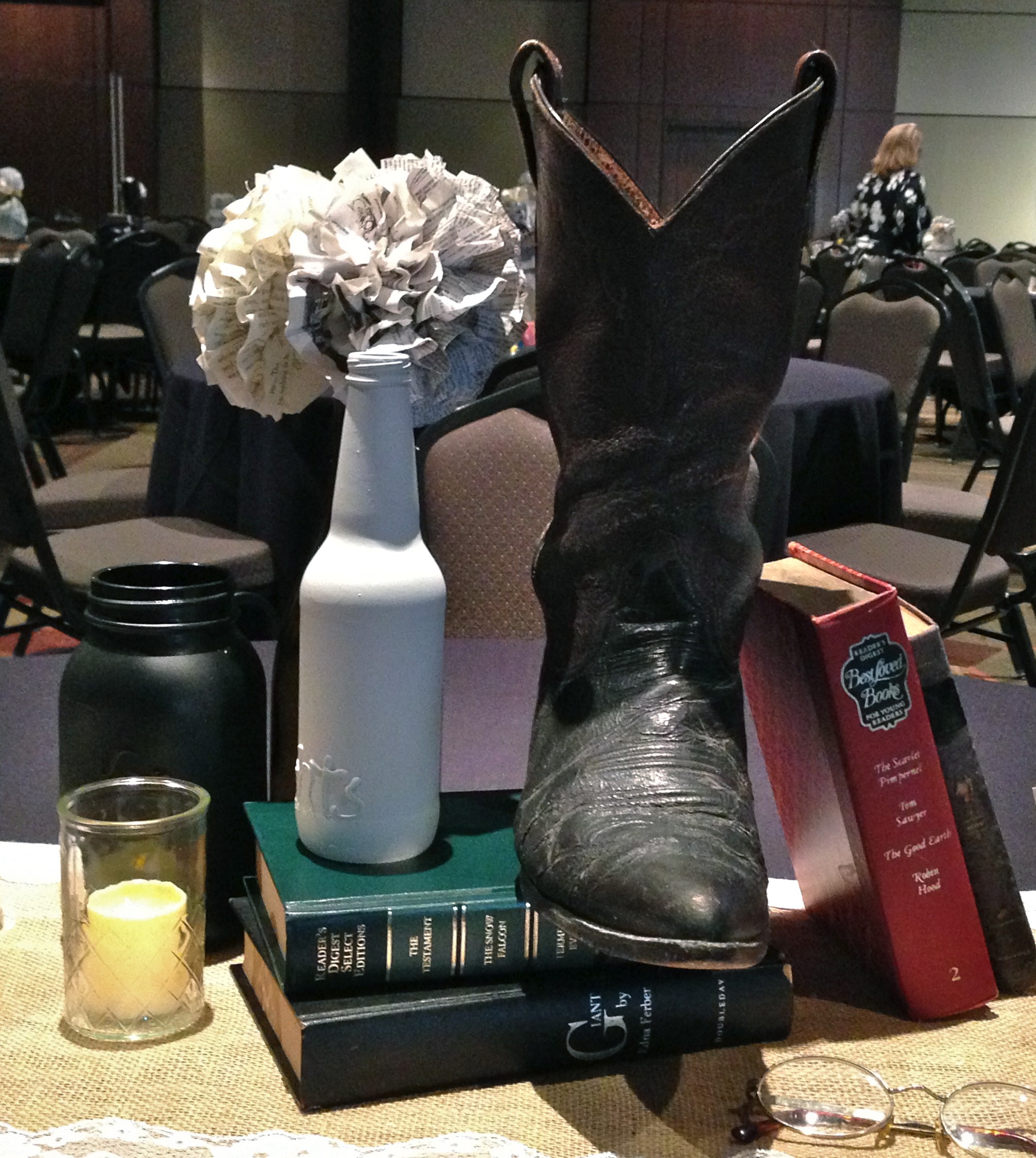
Books and Boots
Books and Boots

I’ve been working on a novel for the last year and a half. More so learning the trade and the potential of my abilities. Abilities I thought were so striking and creative have been encouraged, judged, praised, condemned, and are now being put to the final test. I’m in Revision Hell.

I now see that my first draft of this particular piece was one big ol’ brain dump, and maybe my brain is not the best and the brightest. From examining what I sat down and read through a few months ago, my brain is a remedial reader with an attention disorder. That’s okay. I can objectively say, looking back with the knowledge I gained, that every large work I’ve done to date has been a fight to get the story on the page—to get the pictures out of my head. The problem is I am attached to these ideas. They are my creative brainchildren. I protected them from every slight and offending remark because they are so much a part of me.

No more.

The book I am working on at the moment has become an unruly teenager. Full on bad attitude and unwillingness to bend. Ha. I’m tougher than that. A little tough love would do it some good. I am ready to get the revisions done and kick the overgrown kid out of my house. This pompous little piece of work needs to get out and start proving itself on its own.

That’s how you have to see the process. When you start, the idea is grand and wonderful. You look forward to nurturing the seed and completing the first draft. It is a great accomplishment when there’s a thick pile of double-space pages neatly tucked in a box. I can imagine it now—the smell of printer ink and the feel of the warm paper. My idea has been given life. Some people stop here. They guard it and protect it from the outside world. I know I did. But was I right in doing so? If you stop at this point, the idea on paper will never truly flourish. It will never grow to influence another. It will sit in a box or on a flash drive until it dies hidden away from the judging eyes of the world.

Get past that. Walk away. Give it breathing room, then come back and see it for what it is. It’s still just an idea. What could be better? What problems does it have? How can you fix it? And the scariest of all, what does someone else think of it?

Revision is not about reviewing for passive phrases and adverbs. It’s not simply running it through a spell check. This is about getting in there and tearing it apart. It can be stronger. How are you going to do that? It can have more depth. How are you going to give it more emotion? It’s hard work, because this is your child, but you can do it.

I’m going through it now. I am throwing out entire portions of the manuscript. Characters are being set aside because I realize I had them in place for only one reason. I see the holes for what they are now. I will make it the best I can, and then I will send it out into the world. I can’t promise I won’t be hurt when that first criticism hits, but I will be in a better place to understand.